
Lots, recalls and cold chain
Per-item shelf life, first-expiry-first-out consumption, storage-condition fields, and recall genealogy that traces a lot back through the supply chain.
- Supplier
- Lot received
- Storage
- FEFO
- Where it went

01The second system
A standalone, multi-industry app on its own AI-first data model: forecasting, reorder points, lot traceability and valuation, without the shop-floor surface.
Running a plant, not a warehouse? See the Manufacturing platform. Already sold? Jump to pricing.
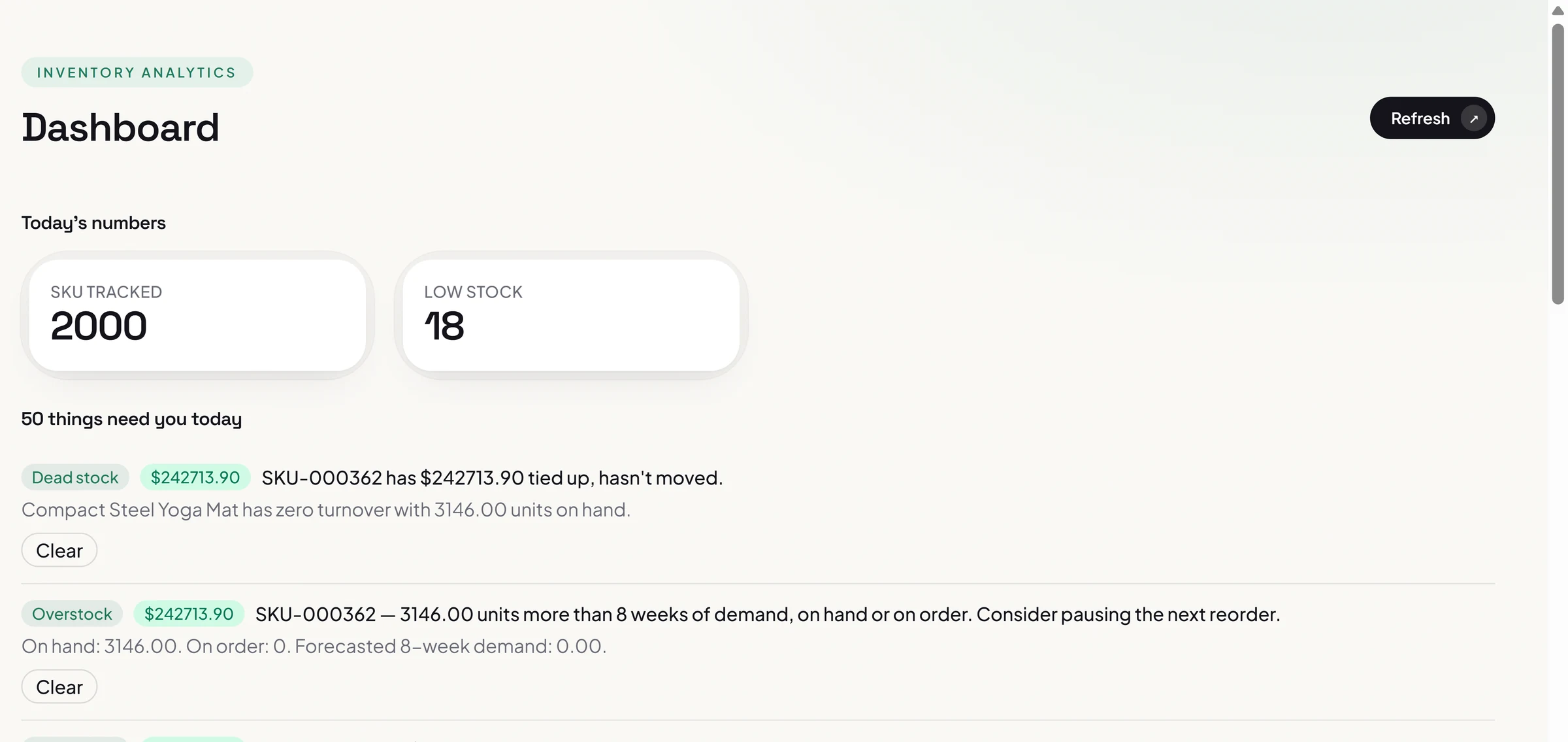
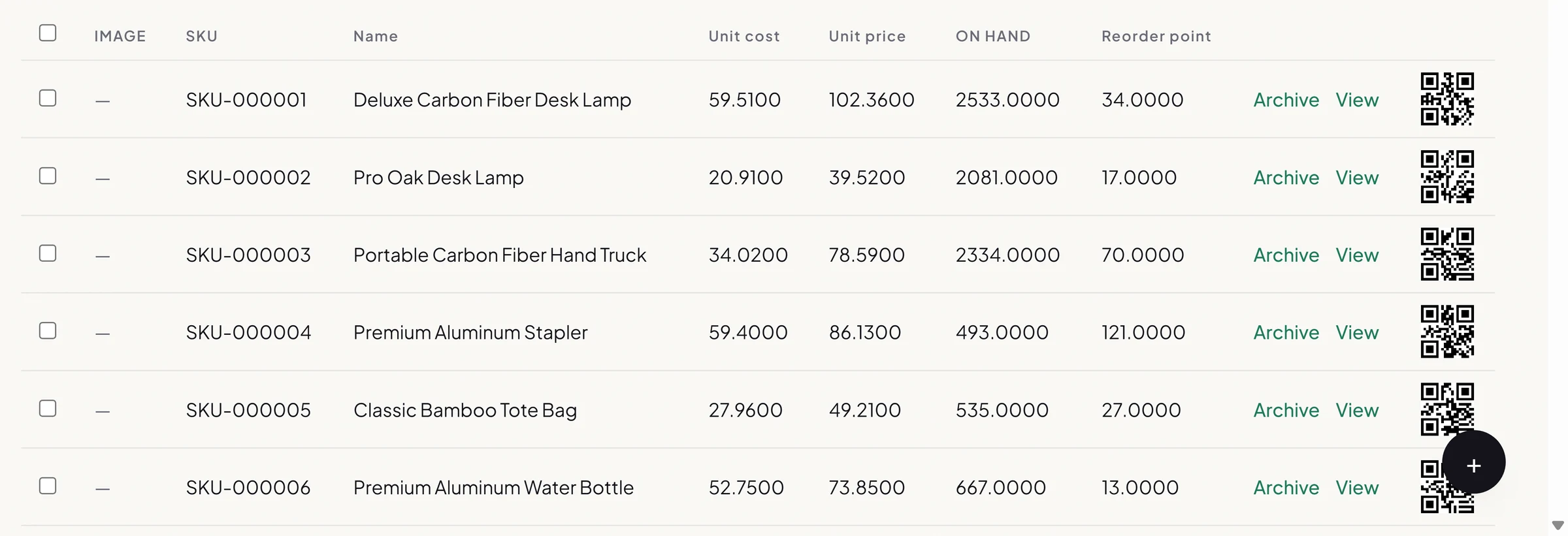
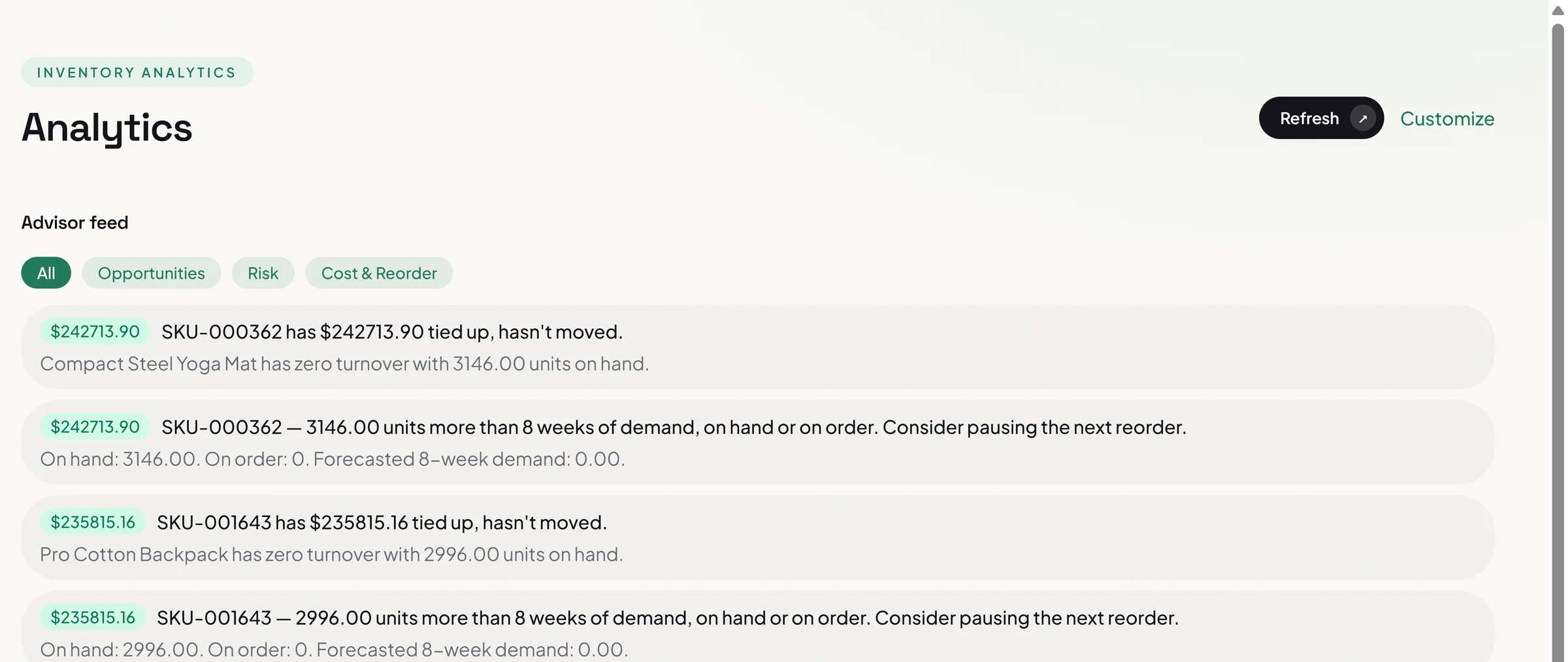
03Not a mockup
04Forecast, then reorder
The model is chosen per item, from that item's own consumption history.
Long gaps, then a movement — fitted on the gaps as well as the sizes.
Demand drifting one way, with level and slope tracked apart.
A shape that repeats — the season is fitted, not smoothed away.
No trend and no season, so nothing is invented to fit one.
Safety stock and reorder points are derived from the forecast and from the variance in supplier lead times, then drafted as a purchase order per supplier.
reorder → draft
05What the ledger has to survive
Per-item shelf life, first-expiry-first-out consumption, storage-condition fields, and recall genealogy that traces a lot back through the supply chain.
FIFO, LIFO and weighted-average costing, aging and turnover — computed over a transaction ledger designed from the start to be read by models, not just rendered in a table.
06Outside signals
It reads the WHO's Disease Outbreak News feed and Google Trends, then matches what it finds against your own catalog.
It never places the order — every signal arrives as a recommendation for a person to accept or ignore.
07Inside the product
Croston + SBA for intermittent demand, Holt for trend, Holt-Winters for season, average otherwise — chosen per item.
Safety stock and a purchase-order draft per supplier. Nothing sends itself — a person confirms every write.
Shelf life, storage conditions, and a recall genealogy traced backward through the supply chain.
FIFO, LIFO, and weighted-average costing, plus aging and turnover, on a ledger built to be read by models.
WHO Disease Outbreak News and Google Trends, matched against your own catalog — a recommendation, never an order.
Apparel, food, manufacturing, pharma, and hospital supply, all on the same forecasting and lot data model.
08Five industries
Per-item forecasting for size and season curves, without a generic reorder rule flattening the shape.
Shelf life, FEFO consumption, storage-condition fields, and recall genealogy traced back through the supply chain.
Lot and valuation data that reads the same whether the unit is a raw material or a finished good.
The same lot and recall machinery food runs, held to the traceability a regulated shelf needs.
Supply tracking on the forecasting and reorder-point model, not a spreadsheet someone owns personally.
09Pricing
One app, three tiers. Every button installs the same Microsoft Store listing.
Track items, lots, and locations. No card.
$0
Get it on Microsoft StoreForecasting and reorder points, once tracking alone isn’t enough.
$24.99/mo
Get it on Microsoft StoreValuation and outside signals for the full ledger.
$69.99/mo
Get it on Microsoft Store10Asked about this product specifically
No. Reorder logic drafts a purchase order per supplier, and an outside signal arrives as a recommendation — but drafts stay drafts until a person confirms them. The same gate covers every write the chat assistant proposes, from a stock adjustment to a purchase order.
Croston's method with the SBA bias correction for intermittent demand, Holt where there's a trend, Holt-Winters where there's a season, and a plain average where there is neither — chosen per item from that item's own consumption history rather than set once for the whole catalog.
No. Inventory Analytics is standalone, on its own AI-first data model. If you are running a plant rather than a warehouse, the manufacturing platform is the other door.
Yes. Free tracks items, lots, and locations with CSV import and low-stock alerts, no cost. Forecasting and reorder points are Growth; valuation and outside signals are Pro. All three install from the same Microsoft Store listing.
Anything else, ask it directly — the Manufacturing page covers how the modules share one data model.
11Get the app
Install it on Windows and point it at one catalog or one season of consumption history — the forecasts and reorder points are ready as soon as the data is.